
The real estate industry generates an awful lot of statistics. While average days on market, sale to list price ratios and other stats offer useful insight into what’s going on in a given market, it’s prices that really command attention.
Whenever you see headlines about prices rising or falling, they are based on stats. The biggest provider of those stats are real estate boards and they do their best to provide accurate information. Sometimes, however, the data can be skewed by inaccuracies – and sometimes they’re inaccurate on purpose.
It’s time to talk about that perineal favourite word in real estate – location.
Location, location…wait, what was the third thing?
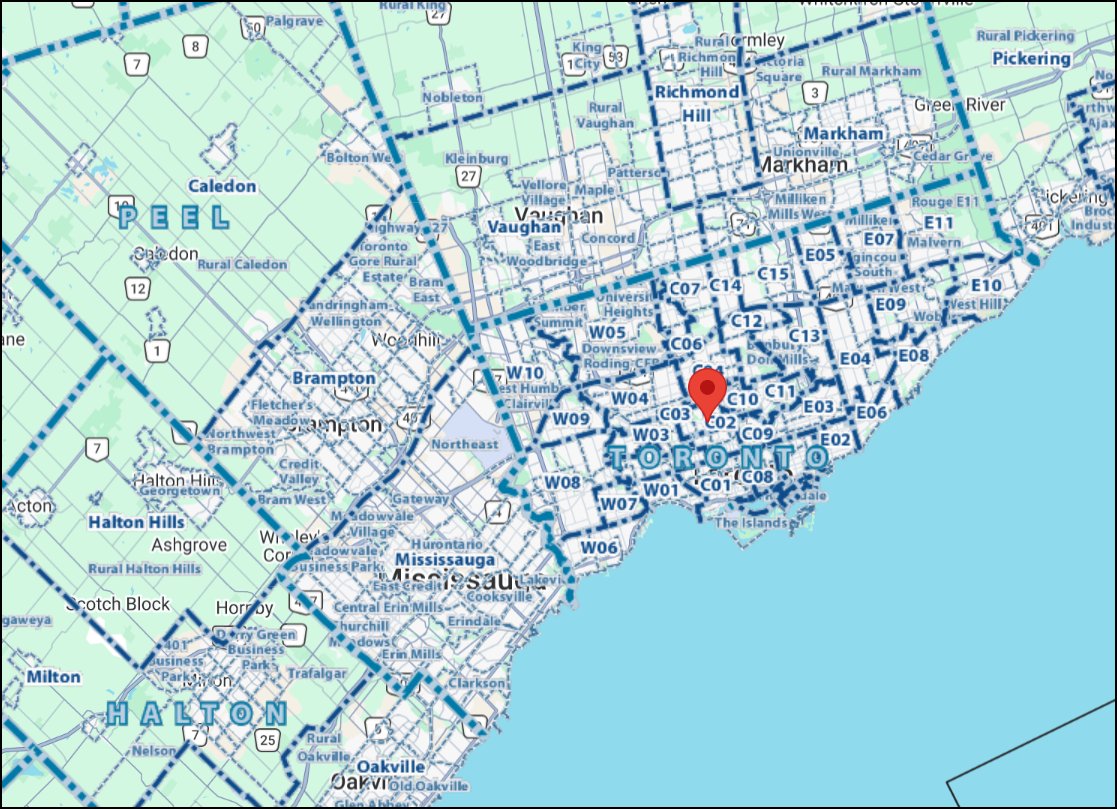
While the old adage about real estate being about “location, location, location” may still have some truth to it, you can also say that all listings have three locations. This is because when it comes to the Multiple Listing Service (or MLS) where listings are posted, each property has three location designations.
The first is MLS Area, which is the broadest and largest geography. Within the Toronto Regional Real Estate Board’s boundaries, we have seven of these MLS areas – Toronto, Peel, Halton, York, Durham, Dufferin and Simcoe.
Each MLS Area then has smaller districts within it, called the MLS Municipality. Despite the name, many MLS Municipalities are not in fact municipalities. If you look within Toronto, there are dozens of MLS Municipalities, following numbered naming conventions based on which part of the city they are located. All areas in the east of the city start with E0 followed by a number, central locations are C0 followed by a number and western areas are called – you guessed it – W0 followed by a number. Outside of Toronto the municipality tag makes more sense, as they do somewhat correspond. For example, the MLS Area of Peel has three MLS Municipalities – Brampton, Mississauga and Caledon.
Finally, the smallest, most local MLS segments are MLS Communities. If you’re looking in Toronto or other densely populated areas, these MLS Communities are recognizable neighbourhoods, such as Mimico, the Beaches, or Bayview Village. Outside of urban centres, however, the MLS Community may be an entire town or city. For example, Georgetown is an MLS Community and there isn’t any smaller segmentation in the data provided by TRREB.
Below is a map that gives you a sense of what these MLS segments look like across the GTA.
Get to the teleporting building already.
Now that we’re clear on the idea of MLS Areas, Municipalities and Communities, let’s talk about why real estate agents sometimes put the wrong designation on their listing.
Below is a picture of 500 St. Clair Avenue West. It’s a lovely condo building located on the corner of Bathurst and St. Clair in Toronto.
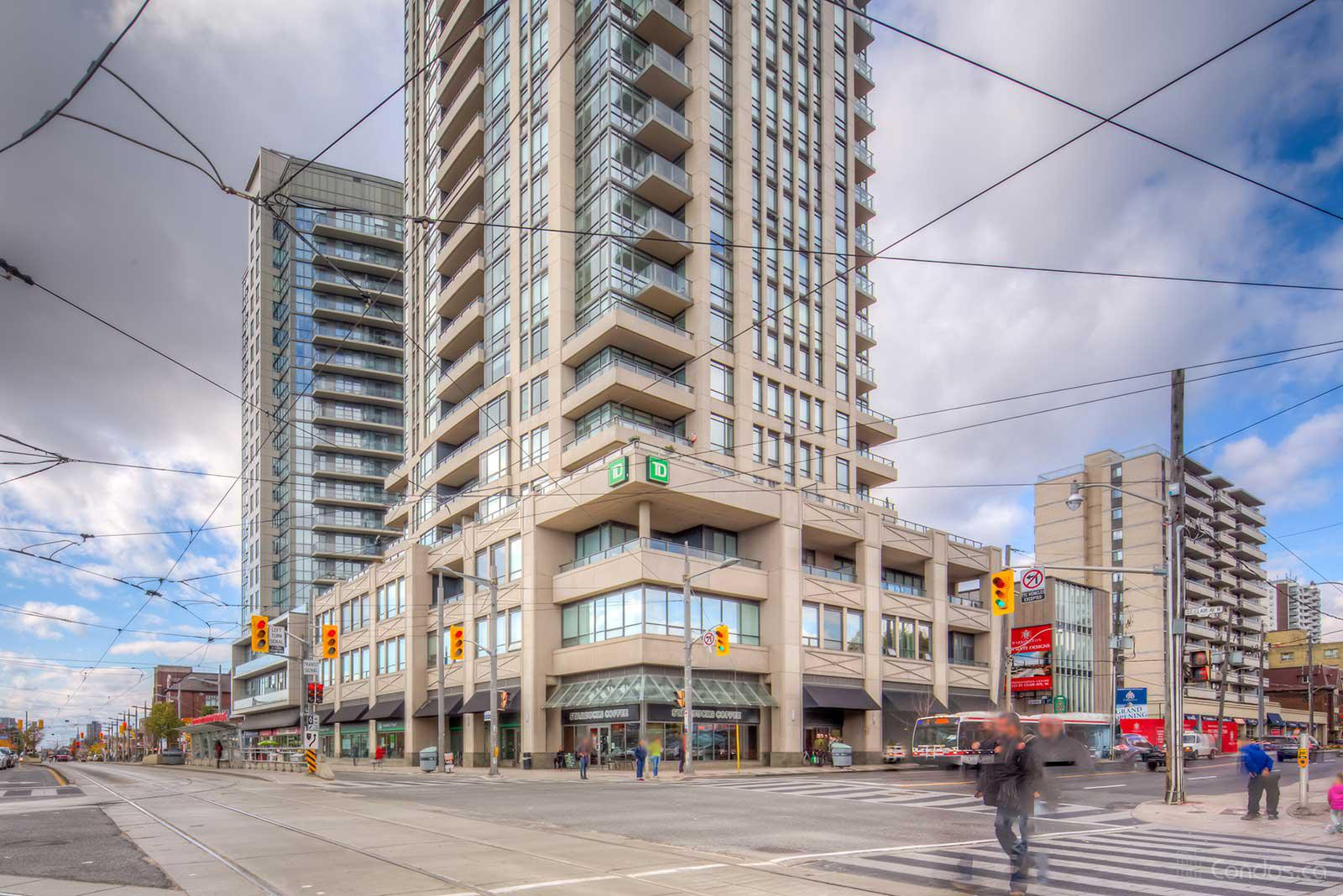
IMAGE COURTESY OF CONDOS.CA
It’s located at the intersection of two MLS Municipalities (C03 and C02) and four MLS Communities (Humewood-Cedarvale, Forest Hill South, Casa Loma and Wychwood). While it may be right beside another MLS Municipality and bounded by three other MLS Communities, make no mistake, 500 St. Clair Avenue West is located in C03, Humewood-Cedarvale.
We have a client who we’ve helped buy in the building who’s considering selling their unit. As part of our research into determining the value of the unit, we looked at the 10 most recent sales in the building. Seven of the listings correctly identified the unit as being located in Humewood-Cedarvale, while three of them had the MLS Community listed as Forest Hill South.
Did these three units somehow teleport to the eastern side of Bathurst? Perhaps they all had very large balconies that were built across the street so they technically were partially in Forest Hill South? Sadly, the answer is no, and the reason these units were misrepresented as being in another MLS Community was for just one reason – price.
So, you’re 6’2 on your online dating profile but 5’9 in real life?
Much like the person pretending to be something they aren’t in order to attract attention, some real estate agents choose to misrepresent the location of their listing to make them appear more valuable.
Let’s look at the differences between Humewood-Cedarvale and Forest Hill South.
First, here’s the stats for the sales of condo units in Humewood-Cedarvale so far in 2026.
- Average sale price: $454,909
- Average days on market: 46.7 days
- Sale-to-list price: 96.5%
Compare that against the stats for sales of condo units up to May 30, 2026 in Forest Hill South.
- Average sale price: $1,229,287
- Average days on market: 28.9 days
- Sale-to-list price: 97.8%
If you could wave a wand and move your condo unit from Humewood-Cedarvale to Forest Hill South, it would be very helpful! You’d sell for about $775K more, it would take about 18 days less to sell and you’d get 1.4% closer to your list price.
But it’s the same location!
Despite some agents choosing to misrepresent the location of their property for sale, it isn’t actually in another MLS Community. It’s not as if a buyer thinks they’re buying in Forest Hill South when they’re really buying in Humewood-Cedarvale, right?
The reason some agents take this approach is to appeal to a presumably more affluential buyer pool. While anyone searching for condo units for sale in the building would see all of the units, regardless of what MLS Community they’re listed under, anyone who is looking for a condo unit in Forest Hill South would see inaccurately listed units in their search results.
It is questionable as to how impactful such deceitful location listings are in terms of sale price. After all, while it may encourage some buyers from the neighbouring MLS Community to cross the border and view the listing, the reverse is true for buyers searching in the accurate MLS Community. It seems likely that buyers looking in the actual area you’re located within would be more eager to purchase the unit. At the end of the day, one thing is certain – it makes the data less accurate for everyone. How inaccurate? Let’s check.
It’s just $177,000 off, what’s the big deal?
When we looked at the data for one month when two of these misrepresented listings were sold, here’s what we found.
The data showed six sales in Forest Hill South, which an average sale price of $1,045,000. Two of those sales were in fact in Humewood-Cedarvale and shouldn’t have been included in the dataset. When we remove those, the average price rose to $1,223,000. That means the average sale price was under reported to the tune of about $177,000. This is just one month in one MLS Community and it is unknown how prevalent this practice is on MLS listings.
Given the importance of real estate stats in both reporting on the market and calculating current values for real estate, such misrepresentations of location do tremendous harm to the accuracy of the data. We’ve only ever seen this take place where an agent is pretending it is located in a higher-priced MLS Community, so it just serves to bring down the average in those higher-priced areas and under-report the actual sales taking place in the real MLS Community the property within which it is actually located.
The ability of unethical agents to misrepresent their properties has persisted for a long time and it is our hope that the loophole will be changed soon. While it may have been onerous in the past to have someone check each MLS listing to ensure accuracy of the location, it seems simple enough now given the technology we have available.
Whether you’re buying or selling, experienced agents know that things aren’t always what they appear. In our work with our clients on both sides, we make sure that the data we’re relying on to inform our decisions is accurate. If that sounds appealing to you, get in touch with us to discuss how we can help you buy or sell!
